
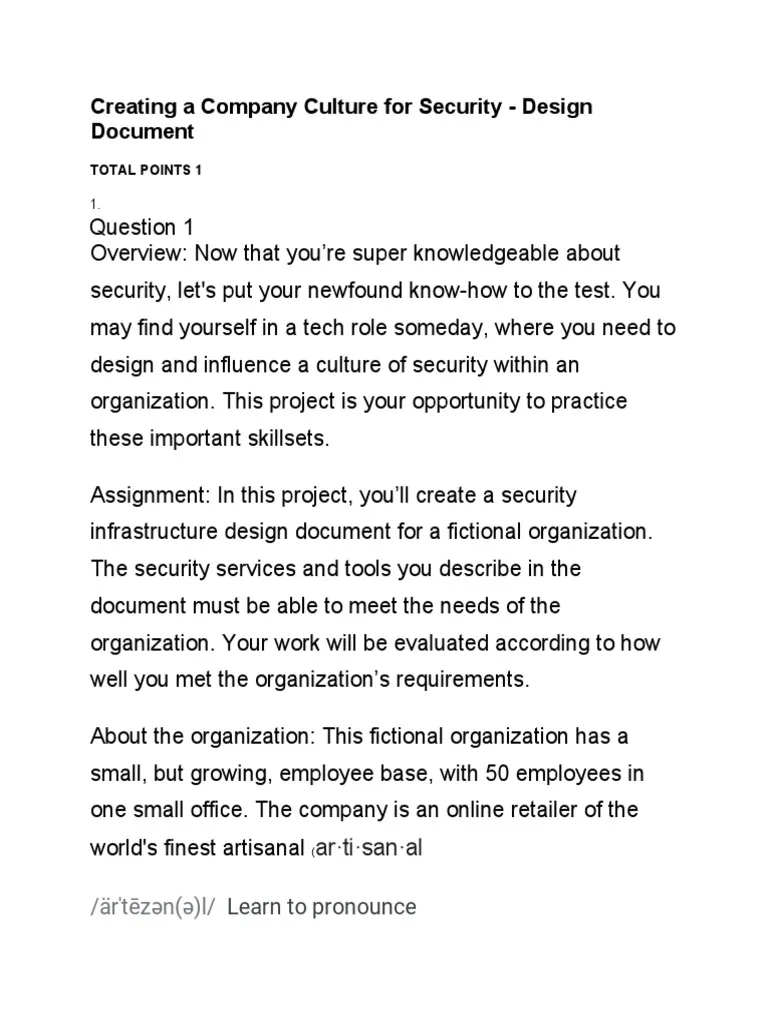
Question 1
Creating a Company Culture for Security – Design Document Overview: Now that you’re super knowledgeable about security, let’s put your newfound know-how to the test. You may find yourself in a tech role someday, where you need to design and influence a culture of security within an organization. This project is your opportunity to practice these important skillsets.
Assignment: In this project, you’ll create a security infrastructure design document for a fictional organization. The security services and tools you describe in the document must be able to meet the needs of the organization. Your work will be evaluated according to how well you met the organization’s requirements.
About the organization: This fictional organization has a small, but growing, employee base, with 50 employees in one small office. The company is an online retailer of the world’s finest artisanal, hand-crafted widgets. They’ve hired you on as a security consultant to help bring their operations into better shape.
Organization requirements: As the security consultant, the company needs you to add security measures to the following systems:
- An external website permitting users to browse and purchase widgets
- An internal intranet website for employees to use
- Secure remote access for engineering employees
- Reasonable, basic firewall rules
- Wireless coverage in the office
- Reasonably secure configurations for laptops
Since this is a retail company that will be handling customer payment data, the organization would like to be extra cautious about privacy. They don’t want customer information falling into the hands of an attacker due to malware infections or lost devices.
Engineers will require access to internal websites, along with remote, command line access to their workstations.
Grading: This is a required assignment for the module.
What you’ll do: You’ll create a security infrastructure design document for a fictional organization. Your plan needs to meet the organization’s requirements and the following elements should be incorporated into your plan:
- Authentication system
- External website security
- Internal website security
- Remote access solution
- Firewall and basic rules recommendations
- Wireless security
- VLAN configuration recommendations
- Laptop security configuration
- Application policy recommendations
- Security and privacy policy recommendations
- Intrusion detection or prevention for systems containing customer data
Creating a Company Culture for Security – Design Document
In today’s digital landscape, creating a robust company culture for security is crucial for protecting sensitive information and maintaining trust with clients and stakeholders. This design document outlines the essential steps and strategies to foster a security-first mindset within your organization.
1. Introduction Creating a Company Culture for Security – Design Document
Building a strong security culture requires a proactive approach and commitment from all levels of the organization. This document provides a detailed framework for implementing and sustaining a security culture that safeguards your company’s assets and data.
2. Leadership Commitment
Leadership plays a pivotal role in establishing a security-focused culture. It’s imperative for senior management to demonstrate a clear commitment to security by:
- Setting security as a top priority in company values.
- Allocating resources for security initiatives.
- Leading by example in adhering to security protocols.
3. Employee Training and Awareness
Educating employees about security risks and best practices is essential. Implement comprehensive training programs that include:
- Regular security awareness sessions.
- Interactive workshops and simulations.
- Up-to-date information on emerging threats and preventive measures.
4. Clear Policies and Procedures
Develop and communicate clear security policies and procedures. Ensure that these guidelines are easily accessible and understood by all employees. Key areas to cover include:
- Data protection and privacy policies.
- Password management and authentication protocols.
- Incident reporting and response procedures.
5. Technology and Tools Creating a Company Culture for Security – Design Document
Leverage advanced technology and tools to support your security culture. Key components include:
- Implementing multi-factor authentication (MFA) and encryption.
- Using secure communication channels and collaboration platforms.
- Regularly updating and patching systems and software.
6. Continuous Improvement
A security culture is not static; it requires continuous evaluation and improvement. Strategies include:
- Conducting regular security audits and assessments.
- Gathering feedback from employees to identify areas for enhancement.
- Staying informed about industry best practices and incorporating them into your policies.
7. Reward and Recognition
Encouraging a positive security culture can be reinforced through reward and recognition programs. Recognize and reward employees who demonstrate exemplary security practices and contribute to the overall security posture of the organization.
8. Collaboration and Communication
Foster an environment of open communication and collaboration regarding security. Encourage employees to:
- Share security concerns and suggestions.
- Participate in security-focused forums and discussions.
- Collaborate with IT and security teams to implement best practices.
9. Incident Management
Prepare for potential security incidents with a robust incident management plan. Key elements include:
- Establishing a dedicated incident response team.
- Defining clear roles and responsibilities.
- Regularly conducting incident response drills.
Creating a company culture for security is an ongoing process that requires dedication and involvement from everyone within the organization. By following the strategies outlined in this design document, your company can build a resilient security culture that protects against threats and promotes a safe working environment.
Get Started Today!
Take the first step towards enhancing your company’s security culture. Visit our website NurseHomeworks.com to access more resources and expert guidance on building a secure organizational culture.

11. Integration with Business Processes Creating a Company Culture for Security – Design Document
Integrate security practices into your everyday business processes to ensure that they become a natural part of your organizational workflow. This involves:
- Embedding security checkpoints in project management workflows.
- Ensuring that new business initiatives and technologies are reviewed for security implications.
- Aligning security goals with business objectives to promote a cohesive approach.
12. Role-Based Access Control
Implement role-based access control (RBAC) to minimize security risks by ensuring that employees have access only to the information necessary for their roles. Key steps include:
- Defining roles and responsibilities clearly.
- Assigning permissions based on the principle of least privilege.
- Regularly reviewing and updating access controls.
13. Third-Party Risk Management
Evaluate and manage the security risks associated with third-party vendors and partners. Key measures include:
- Conducting thorough due diligence before engaging with third parties.
- Establishing clear security expectations and requirements in contracts.
- Regularly monitoring third-party compliance with your security policies.
14. Physical Security Measures Creating a Company Culture for Security – Design Document
Ensure that physical security measures are in place to protect your organization’s assets and data. This includes:
- Securing physical premises with access controls and surveillance systems.
- Implementing policies for the secure disposal of sensitive documents and devices.
- Educating employees about the importance of physical security.
15. Secure Development Practices
For organizations involved in software development, adopting secure development practices is critical. Implement practices such as:
- Incorporating security testing throughout the software development lifecycle (SDLC).
- Conducting code reviews and vulnerability assessments.
- Providing secure coding training for developers.
16. Data Protection and Privacy
Protecting sensitive data and ensuring privacy compliance is essential. Key strategies include:
- Implementing data encryption both at rest and in transit.
- Establishing data retention and destruction policies.
- Ensuring compliance with relevant data protection regulations (e.g., GDPR, CCPA).
17. Crisis Communication Plan
Prepare a crisis communication plan to handle security incidents effectively. This involves:
- Defining communication protocols for internal and external stakeholders.
- Training employees on how to report and respond to security incidents.
- Establishing a communication team to manage public relations during a security crisis.
18. User Behavior Analytics
Utilize user behavior analytics (UBA) to detect and respond to anomalous activities that may indicate a security threat. This includes:
- Monitoring user behavior to establish baseline activities.
- Identifying deviations from normal behavior that could signify a breach.
- Implementing automated alerts and responses to potential threats.
19. Cybersecurity Awareness Campaigns
Launch ongoing cybersecurity awareness campaigns to keep security top-of-mind for all employees. This includes:
- Creating engaging and informative content such as newsletters, posters, and videos.
- Organizing regular security awareness events and activities.
- Encouraging a culture of vigilance and proactive security behavior.
20. Performance Metrics and Reporting
Track and report on security performance metrics to measure the effectiveness of your security culture initiatives. This involves:
- Defining key performance indicators (KPIs) for security.
- Regularly reviewing and analyzing security reports.
- Using insights from performance metrics to improve security strategies.
Creating a robust company culture for security is essential for safeguarding your organization’s assets and data. By following the comprehensive strategies outlined in this design document, you can cultivate a security-first mindset among your employees and protect your company from evolving threats.
Take action today to enhance your company’s security culture. Visit NurseHomeworks.com for more resources and expert guidance on building a secure organizational culture.